LAS Terminal 1 Vs Terminal 3: Your Airline Decides
Introduction
When you search for "LAS Terminal 1 vs Terminal 3," you might expect a comparison that helps you choose. But at Harry Reid International Airport (formerly McCarran), the choice is rarely yours to make. Your airline assignment determines which terminal you use, and in most cases, you'll have no reason to visit the other one.
Terminal 1 is the larger domestic hub, while Terminal 3 handles nearly all international arrivals and a smaller set of domestic carriers. Understanding the differences between them matters most when you're connecting between flights or trying to navigate a complicated itinerary.
Quick Answer: LAS Terminal 1 vs Terminal 3 is not a matter of preference for most travelers. Your airline determines your terminal, and a free landside shuttle connects the two if you need to transfer.
Key Takeaways
- LAS Terminal 1 and Terminal 3 are not competing choices for most travelers — your airline assignment determines which one you use.
- Terminal 3 handles nearly all international arrivals and a distinct set of domestic carriers; Terminal 1 is the larger hub for domestic flights.
- A free inter-terminal shuttle connects T1 and T3, operating outside the secure area.
- Terminal 3 is generally newer and less crowded, while Terminal 1 offers more dining and retail options.
- There is no Terminal 2 at Harry Reid International Airport — the old T2 was demolished and absorbed into the T1/T3 structure.
The Complete Answer: Which Terminal Should You Use at LAS?

A wide exterior shot of the Las Vegas airport terminals, highlighting the shuttle connection between Terminal 1 and Terminal 3.
The Single Rule That Decides It: Your Airline, Not Your Preference
The most important thing to understand about LAS Terminal 1 vs Terminal 3 is that the comparison is almost never a real choice. Airlines sign leases with specific terminals, and your ticket dictates where you check in, clear security, and board.
If you're flying Southwest, you'll be at Terminal
- If you're arriving on an international flight, you'll land at Terminal
- The airport does not let you pick your terminal based on which one you prefer.
Quick Answer: Check your airline's terminal assignment before you leave for the airport. That's the only reliable way to know whether you're going to T1 or T3 at Harry Reid.
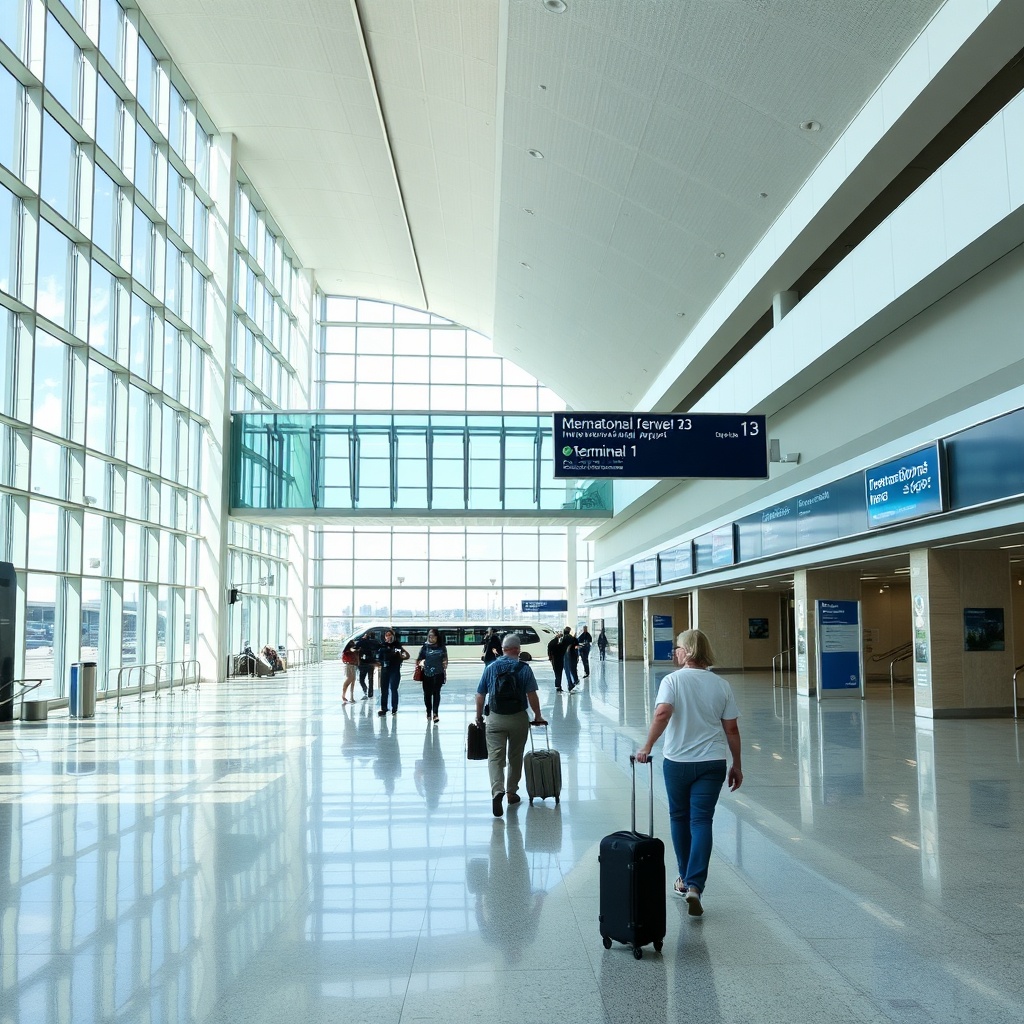
A bright interior view of Terminal 3, showcasing the modern amenities and international travel atmosphere, contrasting with Terminal 1.
Quick Verdict by Traveler Type (Domestic, International, Connecting)
- Domestic travelers on Southwest, Spirit, and most legacy carriers: You'll likely be at Terminal
- International arrivals: You'll arrive at Terminal 3, where customs and immigration processing is located.
- Connecting passengers with flights in both terminals: You'll need to exit security and take the free shuttle between terminals.
The "No-Choice" Reality: Why Most Passengers Never Compare Terminals
For the vast majority of passengers, the LAS Terminal 1 vs Terminal 3 question never actually comes up. You check your airline, go to the right terminal, and board your flight. The comparison only becomes relevant when you're connecting between terminals or trying to find a specific amenity that might be in the other building.
Terminal 1 vs Terminal 3: Physical Layout, Access, and Getting Between Them
Where Each Terminal Sits on the Airport Campus
Terminal 1 is the older, larger terminal at Harry Reid International Airport. It sits on the eastern side of the airport campus and has been expanded over the years to accommodate the airport's heavy domestic traffic.
Terminal 3 is located south of Terminal
- It was designed to handle international flights and opened with a more modern layout that includes larger gates for wide-body aircraft.
Parking, Rideshare, and Public Transit Access at T1 and T3
Both terminals have their own parking garages, so you can park close to the terminal you're flying from. Rideshare services like Uber and Lyft have designated pickup areas at each terminal, and public transit options serve both locations.
If you're parking at the wrong terminal, you'll need to use the shuttle to reach the other one — the parking garages are not connected by a walkway.
Definition: A landside shuttle is a transport vehicle that operates outside the secure, post-security area of an airport. At LAS, the T1–T3 shuttle is landside, meaning you must exit security to use it.
The Inter-Terminal Shuttle: How the Connection Actually Works
The free inter-terminal shuttle at LAS operates on the ground level, outside the secure area. If you're connecting between terminals, you must exit security at your arrival terminal, find the shuttle stop near baggage claim, and ride to the other terminal. You'll then re-enter security with your boarding pass.
| Feature | Terminal 1 (T1) | Terminal 3 (T3) |
|---|---|---|
| Eastern side of the airport campus | South of Terminal 1 | **Parking** |
| Dedicated parking garage | Dedicated parking garage | **Rideshare pickup** |
| Designated area at the terminal | Designated area at the terminal | **Shuttle access** |
| Free landside shuttle to T3 | Free landside shuttle to T1 | **Primary use** |
| Domestic flights | International arrivals and selected domestic flights |
Security and Check-In: What Actually Differs Between the Terminals
Security Checkpoint Count and Typical Wait Times
Both terminals have security checkpoints, but the configuration differs. Terminal 1 has a larger number of security lanes to handle its higher passenger volume, while Terminal 3's checkpoint is designed for a smaller, more international mix of travelers.
Wait times at either terminal depend heavily on the time of day and whether you're flying during a peak period. Check the airport's official website or app for current security wait information, which is more reliable than any general rule of thumb.
TSA PreCheck and CLEAR Access Points at Each Terminal
Both Terminal 1 and Terminal 3 have TSA PreCheck lanes, allowing eligible travelers to use the expedited screening process. CLEAR membership is also accepted at both terminals. If you have either credential, make sure your boarding pass reflects it so you're directed to the correct lane.
Check-In Counters and Baggage Drop-Off Layout
Check-in counters are located in the ticketing areas of each terminal. Terminal 1 has more check-in space because it serves more airlines. Terminal 3's check-in area is more compact, reflecting its smaller number of carriers.
If you're flying an international route, you'll need to check in at Terminal 3, where the airline staff are equipped to handle passport verification and international baggage requirements.
Airlines and Flight Operations: Who Flies From Where
Airline Assignments at T1 vs T3
Southwest Airlines is the largest carrier at Terminal 1, operating a significant portion of the airport's domestic departures from there. Several other domestic carriers also use T1.
Terminal 3 is home to international carriers and a smaller number of domestic airlines. It's the terminal you'll use for most flights to and from international destinations.
Quick Answer: Southwest Airlines operates out of Terminal 1 at Harry Reid International Airport. International carriers and most international arrivals use Terminal 3.
International Arrivals and Customs: Why T3 Is the Gateway
Terminal 3 is the primary gateway for international arrivals at LAS. The terminal houses the customs and immigration facilities that process passengers arriving from outside the United States. After clearing customs, you'll exit into the public area of Terminal 3.
If you're connecting to a domestic flight after an international arrival, you'll need to re-check your bags and go through security again — either at T3 or after taking the shuttle to T1.
Connecting Flights: What Happens When Your Itinerary Spans Both Terminals
If your itinerary requires a connection between Terminal 1 and Terminal 3, you'll need to plan for extra time. You must exit the secure area at your arrival terminal, take the shuttle to the other terminal, and clear security again.
The key is to allow enough time for the shuttle ride, the security re-screening, and the walk to your departure gate. If your connection is tight, inform a gate agent or airline staff member — they may be able to help you navigate the transfer.
Amenities, Food, and Entertainment: A Side-by-Side Comparison
Dining and Retail: Which Terminal Has Better Options
Terminal 1 has a broader selection of dining and retail options, reflecting its larger passenger volume. You'll find more restaurants, coffee shops, and souvenir stores throughout the concourses.
Terminal 3 has fewer options, but it includes the amenities you'd expect at an international gateway, including duty-free shopping for international travelers.
Lounges and Quiet Spaces
Both terminals have lounge options, though the specific lounges available depend on your airline, credit card status, or membership. Terminal 3's lounges are oriented toward international travelers, while Terminal 1's lounges serve domestic passengers.
If you need a quiet space, check the airport's lounge directory before you arrive. Some lounges are accessible with a day pass, while others require a specific airline status or credit card.
Family, Accessibility, and Comfort Features
Both terminals are designed to be accessible, with elevators, ramps, and accessible restrooms throughout. Family restrooms and nursing rooms are available at both terminals, though the exact locations vary.
For travelers with mobility needs, the airport offers wheelchair assistance through the airlines. If you need help navigating between terminals, request assistance from your airline in advance.
| Feature | Terminal 1 (T1) | Terminal 3 (T3) |
|---|---|---|
| Broader selection | More limited, but includes duty-free | **Retail** |
| More shops | Smaller selection | **Lounges** |
| Domestic-oriented lounges | International-oriented lounges | **Family facilities** |
| Available | Available | **Crowd level** |
| Generally busier | Generally less crowded |
The Step-by-Step Guide to Moving Between Terminals at LAS
How to Transfer from T1 to T3 (and Back) Without Missing Your Flight
- Land at your arrival terminal and follow signs to the "Terminal Shuttle" or "Inter-Terminal" route.
- Exit the secure area if you are transferring between terminals — the shuttle operates landside.
- Locate the shuttle stop on the ground level near the baggage claim area.
- Board the free shuttle and ride to the other terminal. Allow extra time for waiting and the ride itself.
- Arrive at the other terminal and re-enter security with your boarding pass.
- Allow ample time for the transfer — a connection that spans both terminals needs more buffer than a same-terminal connection.
What to Do If You're at the Wrong Terminal
If you arrive at the wrong terminal, don't panic. Exit the terminal and follow the signs to the shuttle stop. The free shuttle will take you to the correct terminal. Just make sure you leave enough time before your flight's boarding time to complete the transfer.
When You Should Walk Instead of Taking the Shuttle
There is no pedestrian walkway connecting Terminal 1 and Terminal 3 at Harry Reid International Airport. The terminals are separate buildings, and the shuttle is the only way to move between them. So the answer is simple: you should take the shuttle, not walk.
Frequently Asked Questions
Can I walk between Terminal 1 and Terminal 3 at LAS?
No. There is no pedestrian walkway connecting Terminal 1 and Terminal 3. You must take the free landside shuttle, which operates on the ground level near baggage claim.
Which terminal does Southwest Airlines use at Harry Reid?
Southwest Airlines operates from Terminal 1 at Harry Reid International Airport. If you're flying Southwest, plan to arrive at T1.
Is Terminal 3 only for international flights?
No. While Terminal 3 handles nearly all international arrivals at LAS, it also serves a distinct set of domestic carriers. Check your airline's terminal assignment to be sure.
How early should I arrive at LAS for a flight from Terminal 1?
Most airlines recommend arriving at the airport about two hours before a domestic departure and three hours before an international departure. Check your airline's specific guidance, as recommendations can vary.
Does the shuttle between T1 and T3 run 24 hours?
The free inter-terminal shuttle runs on a continuous schedule throughout the day and night to serve all flight schedules. For the most current operating hours, check the airport's official website.
Conclusion
LAS Terminal 1 vs Terminal 3 is not a choice — it's an assignment. Your airline determines which terminal you use, and the free landside shuttle connects the two when you need to transfer. Terminal 1 is the larger domestic hub with more amenities, while Terminal 3 is the international gateway with a quieter, more modern feel.
Before you head to Harry Reid International Airport, check your airline's terminal assignment and give yourself enough time to navigate the airport. If you're connecting between terminals, build extra buffer into your itinerary.