LAS Vs LAX Arrival Experience: 20 Min Vs 90 Min
The moment your wheels touch the tarmac, the LAS vs LAX arrival experience splits into two distinct realities: Las Vegas funnels you into a neon-lit spectacle within half an hour, while Los Angeles immerses you in a sprawling, traffic-choked maze where the journey has only begun. Your arrival experience at these two Southern California gateways is defined by terminal architecture, customs processing, and ground transportation logistics. LAS delivers speed and sensory overload — you're on the Strip or in a rideshare within 20-30 minutes of wheels-down. LAX demands patience and strategy — expect 45-90 minutes before you're in a car, navigating a horseshoe road, shuttle systems, and congested pickup zones. The choice between them isn't about the flight; it's about what happens after you land.
Key Takeaways
- Speed: LAS averages 20-30 minutes from wheels-down to curb; LAX averages 45-90 minutes depending on terminal and traffic.
- Customs: LAS clears international arrivals in about 20 minutes; LAX's Tom Bradley International Terminal (TBIT) averages 45-minute waits, spiking to 60-90 minutes during peak evening hours.
- Ground transport: LAS rideshares pick up curbside in 4-6 minutes; LAX requires a walk or shuttle to the LAX-it lot, adding 25-40 minutes.
- Cost: LAS rideshare to the Strip runs $15-25; LAX rideshare to downtown LA averages $40-60 with a $5.50 surcharge.
- Atmosphere: LAS is a "walk-out" airport designed for spectacle; LAX is a "drive-in" airport where your experience is dictated by your transport mode.
The Complete Answer: How LAS and LAX Arrival Experiences Differ
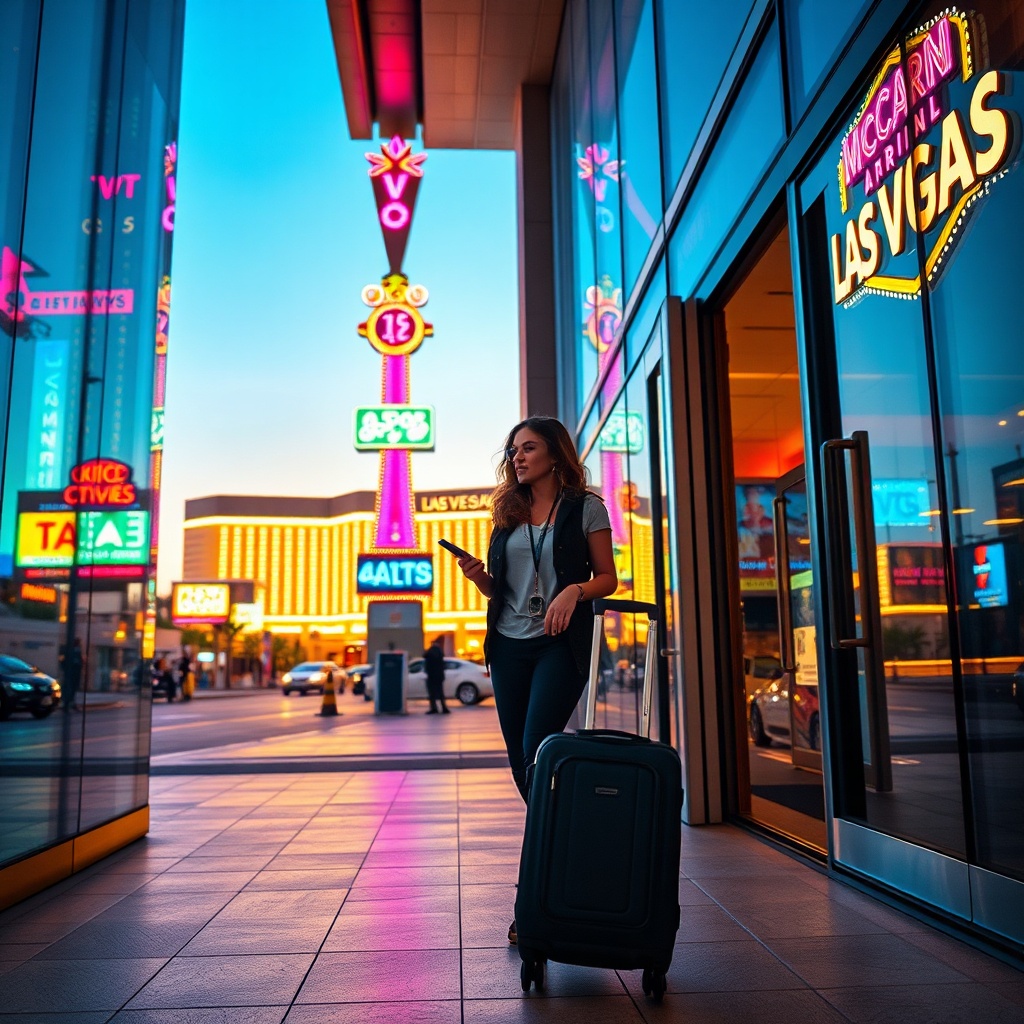
Vibrant depiction of the fast and dazzling Las Vegas arrival, highlighting the quick curb-side pickup and neon spectacle.
What Defines the LAS Arrival Experience
LAS is engineered for speed and spectacle, with a single terminal complex (Terminal 1 and Terminal 3 connected by a walkway) that funnels you past slot machines and neon signs toward the exits or the casino floor. The average walking distance from gate to baggage claim is just 5-7 minutes, and there's no TSA re-entry checkpoint — you exit directly into the public concourse. For domestic arrivals without checked bags, you can be in a rideshare within 15 minutes of deplaning. The airport's design prioritizes flow over comfort, but that flow is remarkably efficient.
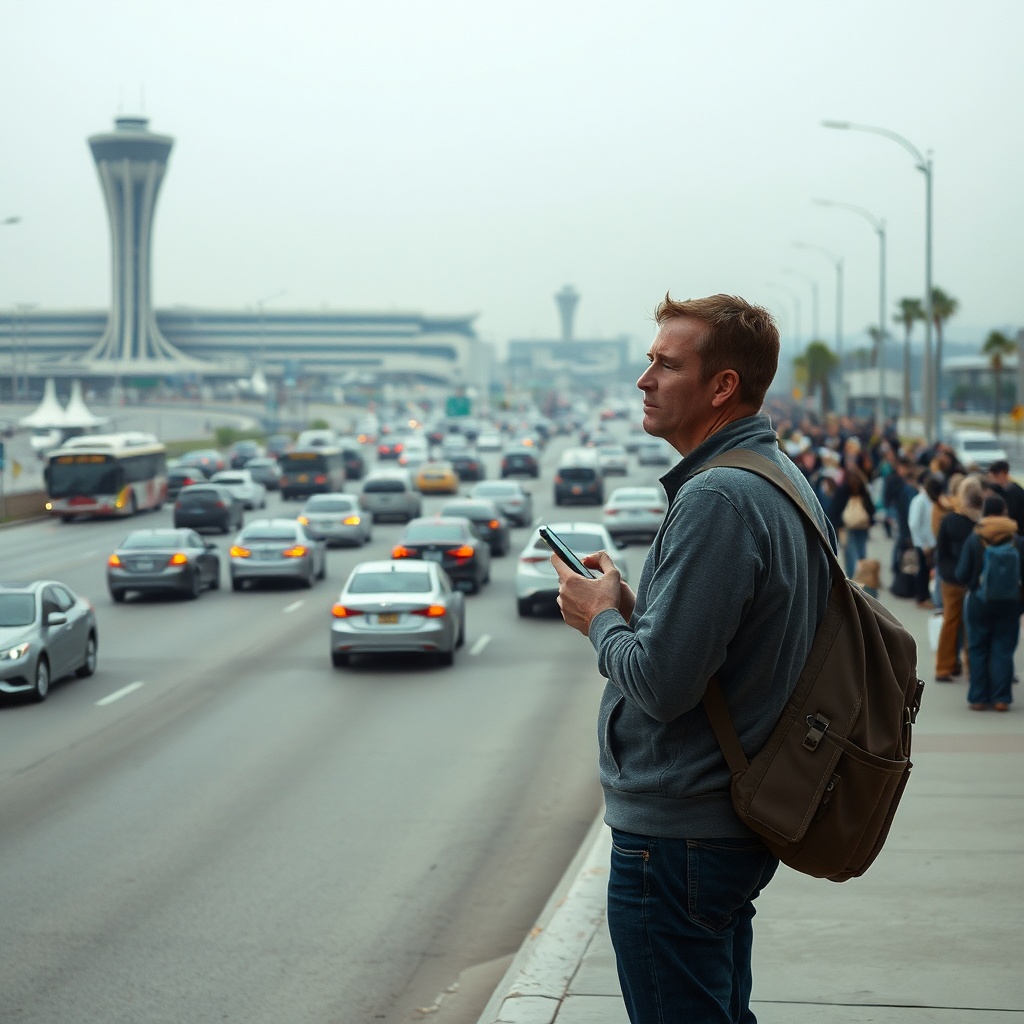
Moody and realistic portrayal of the LAX arrival, emphasizing traffic congestion, shuttle logistics, and the lengthy journey to leave the airport.
What Defines the LAX Arrival Experience
LAX is a massive, multi-terminal hub where the real journey begins after landing. With 9 terminals plus the Tom Bradley International Terminal (TBIT) arranged in a U-shape around a central horseshoe road, navigating from gate to curb can easily exceed 20 minutes — especially for remote gates that require shuttle buses or long underground tunnels. The airport's layout is car-centric, meaning your arrival experience is heavily influenced by traffic congestion on the horseshoe road and your chosen transportation mode. Unlike LAS, there's no single "exit" — you emerge into a chaotic landscape of shuttle stops, crosswalks, and curbside traffic.
The Verdict in One Sentence
LAS wins decisively on speed and simplicity, while LAX wins on international connectivity and airline variety — but the arrival friction at LAX is significantly higher, demanding more time, money, and patience.
Quick Answer: The LAS vs LAX arrival experience comes down to structure. LAS is a compact, single-complex airport where you can go from wheels-down to a rideshare in under 30 minutes. LAX is a sprawling, multi-terminal hub where the horseshoe road, LAX-it shuttles, and traffic congestion routinely add 45-90 minutes to your journey.
Section 1: Speed to Exit — The Race to the Curb### Step-by-Step: The Typical LAS Arrival Timeline
- Deplane: 2-5 minutes depending on seat location and aircraft type.
- Walk to baggage claim: 5-7 minutes through the terminal concourse.
- Wait for luggage (if checked): 10-15 minutes at the carousel.
- Exit to curbside pick-up or rideshare lot: 2-3 minutes through automatic doors.
- Total: 19-30 minutes from wheels-down to curb.
The LAX Bottleneck: Terminal to Transportation
The bottleneck at LAX is the horseshoe road — a single loop that handles all terminal traffic, shuttles, and private vehicles. For rideshare users, the process is particularly arduous: you must walk or take a shuttle to the LAX-it lot, which sits east of Terminal
- The LAX-it shuttle wait time averages 10-15 minutes, and walking from TBIT to the lot can take 15 minutes alone. Once at the lot, finding your driver amid the chaos adds another 5-10 minutes. This sequence alone — before you're even in a car — can consume 25-40 minutes.
Why LAS Is Structurally Faster
LAS's single terminal complex eliminates the need for inter-terminal transportation, which is the primary time-sink at LAX. At LAS, all gates funnel into one of two baggage claim areas, both of which are directly adjacent to curbside pickup zones. LAX's 9 separate terminals require shuttles, tunnels, or long walks for connections, and each terminal has its own unique baggage claim and pickup configuration.
| **Factor** | **LAS** | **LAX** |
|---|---|---|
| 5-7 min | 15-25 min | Rideshare wait |
| 4-6 min | 15-25 min (incl. shuttle) | Average total (no bags) |
| 25 min | 60 min | Terminal count |
| 2 (connected) | 9 + TBIT |
Quick Answer: LAS is structurally faster because it's a single terminal complex with curbside rideshare pickup. LAX's 9 separate terminals, the horseshoe road, and the mandatory LAX-it shuttle for rideshares add 35-40 minutes of unavoidable transit time compared to LAS.
Section 2: Baggage Claim and Customs — The Hidden Time Sink### LAS: The "No-Frills" Claim
LAS has two main baggage claim areas (Terminal 1 and Terminal 3), with carousels typically located 50-100 feet from the arrival doors. The airport uses a "one belt per flight" system for most domestic arrivals, meaning your luggage doesn't compete with other flights for carousel space. International arrivals at LAS use a separate hall, but the customs and immigration process is streamlined — average clearance time is under 30 minutes, even during peak periods.
LAX: The TBIT Customs Gauntlet
TBIT processes roughly 30% of all international arrivals at LAX, making it one of the busiest international arrival facilities in the United States. During peak hours (4-9 PM), customs waits at TBIT can stretch to 60-90 minutes, with the average hovering around 45 minutes. The facility's size and passenger volume create a bottleneck that's impossible to avoid if you're arriving on a long-haul international flight. The process involves immigration queues, baggage retrieval, and a secondary customs check — each step adding to the total.
The Luggage Carousel Factor
The carousel configuration at LAX often shares belts between multiple flights, which increases wait times significantly. At LAS, the "one belt per flight" system means your luggage is typically on the belt within 10-15 minutes of deplaning. At LAX, shared belts mean you might wait 20-30 minutes for your bags, especially during arrival banks when multiple international flights land simultaneously.
Quick Answer: For international arrivals, LAS clears customs in about 20 minutes, while LAX's TBIT averages 45 minutes and can hit 90 minutes during peak evening hours. LAS's one-belt-per-flight system also speeds up baggage retrieval compared to LAX's shared carousels.
Section 3: Ground Transportation — Rideshare, Rental Car, and Public Transit### LAS: The Rideshare Revolution at the Door
LAS has dedicated rideshare pickup zones directly outside each terminal — no shuttle required. After exiting baggage claim, you follow signs to the designated pickup area, where your driver is typically waiting within 4-6 minutes. The cost from LAS to the Strip is $15-25, making it one of the most affordable airport rideshare trips in the country. The airport's compact layout means you're never more than a 2-3 minute walk from the pickup zone.
LAX: The LAX-it Shuttle Maze
LAX eliminated curbside rideshare pickups in 2019, mandating that all rideshare passengers use the LAX-it lot. The process is multi-step and time-consuming:
- Exit terminal and follow signs to LAX-it (2-5 minutes).
- Wait for shuttle (10-15 minutes average).
- Ride to lot (5-10 minutes through traffic).
- Find your driver in the crowded lot (5-10 minutes).
- Total: 25-40 minutes just to get in a car.
Public Transit and Rental Cars
At LAS, rental cars require a 10-minute shuttle to the remote rental car center, and the RTC public bus stops directly at the terminal with fares starting at $2. At LAX, the rental car center is on-site but requires a 10-15 minute shuttle ride. Public transit options include the FlyAway bus to Union Station ($9.75) or a connection to the Green Line, but these require walking and transfers that add time.
Quick Answer: LAS rideshare pickup is curbside and takes 4-6 minutes; LAX requires a shuttle or walk to the LAX-it lot, adding 25-40 minutes. LAS rideshare to the Strip costs $15-25; LAX rideshare to downtown LA costs $40-60 with a $5.50 surcharge.
Section 4: First Impressions — Atmosphere, Signage, and Sensory Overload### LAS: The Casino Carpet and Slot Machine Ambush
Arriving at LAS, you're immediately greeted by slot machines, flashing lights, and the unmistakable smell of perfume and cigarettes. The airport's design intentionally funnels you past gaming areas — even the baggage claim has slot machines. Signage is oversized and bold, designed to guide you quickly toward exits or the casino floor. The atmosphere is chaotic but energizing, a deliberate preview of the Strip's sensory overload.
LAX: The Architectural Maze and Traffic Noise
LAX's iconic Theme Building and the modern Bradley Terminal architecture are visually impressive, but the signage is often confusing, especially for first-time visitors. The constant sound of traffic, horns, and shuttle engines creates a more stressful atmosphere. The airport's scale is intimidating — 9 terminals, each with its own unique layout — and the horseshoe road is a constant reminder that you're in a car-centric environment.
Which One Is More User-Friendly?
For first-time visitors, LAS is significantly more user-friendly. The single terminal complex, clear signage, and curbside pickup make it nearly impossible to get lost. LAX is more intimidating, but it offers more premium lounges, retail space, and dining options. The trade-off is clear: LAS prioritizes efficiency, while LAX prioritizes amenities — but the amenities come at the cost of a more complex, stressful arrival.
Quick Answer: LAS delivers a sensory-driven, chaotic but efficient arrival with slot machines and bold signage. LAX offers impressive architecture and premium amenities but overwhelms with confusing signage and constant traffic noise. LAS is easier for first-timers; LAX rewards those who know its layout.
Section 5: Hidden Costs and Time Wasters — The Real Price of Arrival### LAS: The "Cheap and Fast" Illusion
While LAS rideshares are cheaper, the airport charges a $2.50 surcharge per trip. However, the total time cost is low — you're not paying for waiting time. The real "hidden cost" at LAS is the temptation to gamble or grab a drink while waiting, which can easily add $20-50 to your trip. Still, the overall cost of arrival is significantly lower than LAX.
LAX: The Premium on Patience
LAX rideshare fees include a $5.50 airport surcharge plus demand pricing, which can double fares during peak hours. A trip to downtown LA can cost $40-60, and the average LAX traveler spends $18.50 on ground transportation and 45 extra minutes compared to LAS. The "hidden" cost at LAX is time — every minute spent waiting for a shuttle or in traffic is a minute you're not at your destination.
The "Hidden" Airport Fees
Both airports charge parking fees, but LAX's are higher: LAS charges $3/hour while LAX charges $5/hour. For travelers who park at the airport, this adds up quickly. Additionally, LAX's remote rental car center and LAX-it lot are designed to maximize revenue from shuttles and fees, while LAS's compact layout minimizes these costs.
Quick Answer: LAS charges a $2.50 rideshare surcharge and $3/hour parking. LAX charges a $5.50 rideshare surcharge, $5/hour parking, and demand pricing. The average LAX traveler spends $18.50 on ground transport and 45 extra minutes compared to LAS.
Section 6: Who Should Choose Which Airport? — A Decision Framework### Best for Business Travelers: LAS
LAS is the clear winner for business travelers. The faster arrival (20-30 minutes vs 45-90), cheaper rideshares ($15-25 vs $40-60), and proximity to the Strip make it ideal for quick meetings. You can land, grab a rideshare, and be in a conference room within 45 minutes of wheels-down. At LAX, the same journey could take 2 hours.
Best for International Travelers: LAX
LAX has direct flights from more global hubs — over 60 international destinations compared to LAS's 15-20. While the customs wait is longer (45 minutes vs 20 minutes), LAX offers more nonstop options from Asia, Europe, and South America. If you're flying long-haul, LAX's connectivity often outweighs the arrival friction.
Best for Families: LAS
LAS is more family-friendly for arrivals. The shorter walking distances (5-7 minutes vs 15-25), dedicated family restrooms, and simpler navigation make it less overwhelming for kids. LAX's crowds, traffic, and complex shuttle systems are stressful for families with children and luggage.
Quick Answer: Business travelers and families should choose LAS for speed and simplicity. International travelers should choose LAX for its superior global connectivity, accepting the longer customs waits and higher costs as the price of access.
FAQ
How long does it take to get out of LAS airport after landing? Average 20-30 minutes from wheels-down to curb, assuming no checked bags and a rideshare pickup. With checked luggage, add 10-15 minutes for baggage claim.
How long does it take to get out of LAX airport after landing? Average 45-90 minutes, depending on terminal, baggage, customs, and transportation mode. International arrivals at TBIT during peak hours (4-9 PM) can take 90+ minutes.
Is LAX or LAS easier for international arrivals? LAS is faster for customs (20 min vs 45 min at LAX), but LAX has more direct international flights. If you value speed, choose LAS; if you need specific international routes, LAX is your only option.
What is the cheapest way to get from LAS to the Strip? Rideshare costs $15-25, but the RTC bus (WAX route) costs only $2 and takes about 30 minutes. The bus stops directly at the terminal, making it the most budget-friendly option.
Do I need a shuttle for rideshare at LAX? Yes, you must use the LAX-it lot. You can either walk (10-15 minutes from most terminals) or take a free shuttle (10-15 minute wait plus 5-10 minute ride). There is no curbside rideshare pickup at LAX.
Conclusion
The LAS vs LAX arrival experience is a tale of two philosophies: LAS optimizes for speed and simplicity, while LAX optimizes for capacity and connectivity. LAS delivers a faster, cheaper, and more sensory-driven arrival — you're on the Strip within 30 minutes of landing. LAX offers superior airline variety and international reach, but demands patience, money, and a tolerance for congestion. If you value time and simplicity, fly into LAS. If you need specific international routes or carriers, accept LAX's friction as the cost of connectivity. The next time you book a flight, factor in the arrival experience — it's not just about the flight, it's about what happens after you land. Choose the airport that aligns with your priorities, and you'll start your trip on the right foot.